 R. Gibson Cheney
Nucor Steel Tuscaloosa Inc.
This summer I returned to Nucor Steel Tuscaloosa Inc. for my final internship before graduation, working again in our rolling mill as a process metallurgy intern. Coming back to the same department was a very different experience to my first summer in the mill.
Instead of spending my first weeks learning the process, I was able to start contributing on day one, and my projects reflected that I was trusted with work that will outlive my time as an intern.
As always, the foundation of everything we did was safety. Every morning began with a department meeting centered on how we could work safely and improve the plant for the people in it, and I continued participating in monthly safety walkthroughs across the mill. After almost three years with Nucor, what stands out to me is how consistent this culture is. It is not a program that gets renewed each year; it is genuinely how our teammates look after one another, and it has shaped how I think about engineering decisions more than any single technical lesson has.
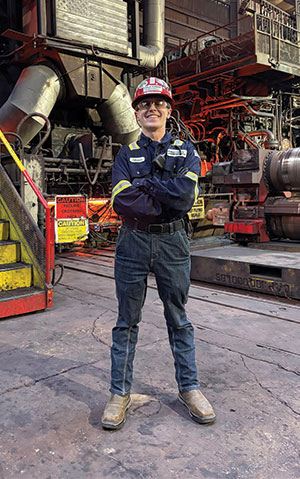 The most substantial project I had was developing a material properties prediction model for our finished steel plate. The goal was to predict mechanical properties: yield strength, tensile strength and elongation, from chemistry and processing variables, so that we could anticipate results earlier in the process rather than waiting on mechanical testing to tell us where a plate landed. Building the model meant pulling together historical data from across our operation, cleaning and reconciling it, and identifying which variables carried predictive weight. Some of the relationships were exactly what the metallurgy would suggest; others were not, and chasing down those discrepancies taught me as much as the model itself did. A model like this has real potential to tighten our confidence in meeting customer specifications, reduce the risk of off-property material, and support decisions on chemistry and rolling practice before a plate is ever produced.
Alongside that project, I assisted with day-to-day metallurgical work throughout the plant. I helped other departments where extra hands were needed, inspected material for surface defects, and supported our production and maintenance teammates. I also had the opportunity to lead several plant tours that gave me a broader look at how our processes connect from the meltshop through final shipping. Having now spent time in all the production departments, I have come to appreciate how decisions made upstream at the caster ripple all the way through to the rolling and finishing of a plate. That perspective is something I could not have gotten from a classroom.
This internship also marked a transition point for me. I graduate from the University of Alabama in December, and I will be joining Nucor Tuscaloosa full time as a process metallurgist. Knowing that I would be returning permanently changed how I approached the summer. Every question I asked and every process I learned was no longer preparation for a class or a resume line. Instead, it was preparation for the job I am about to start, alongside the teammates I will be working with for years to come.
I am deeply grateful to the AIST Foundation for supporting my education and for connecting students like me to this industry, and to Nucor Steel Tuscaloosa Inc. for investing in me. The steel industry has given me a career I am genuinely excited to start, and I look forward to giving back to it.