 Rodrigo A. Molina Martinez
Ternium Mexico
During the summer of 2026, as part of the AIST Steel Intern Scholarship program, I had the opportunity to once again complete a professional internship at Ternium Mexico within the refractories for steelmaking area. Throughout this experience, I worked under the guidance of David Tapia and Pedro Hernández, while also collaborating closely with specialists and operations personnel from the steel shop. Their support, expertise and willingness to share knowledge played a key role in both the successful execution of my projects and my professional development.
My primary projects focused on the development and application of numerical and predictive modeling methodologies aimed at evaluating the service life of refractory components used in steelmaking operations. In particular, my work involved two complementary approaches: physics-based numerical modeling to describe material behavior and statistical predictive modeling using data analysis and machine learning techniques.
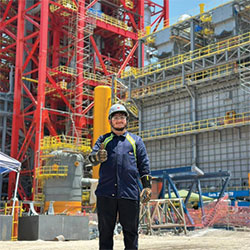 One of the most significant challenges during the internship was developing the specialized knowledge required for predictive modeling. Although my academic background allowed me to quickly become familiar with steelmaking processes and the engineering principles involved, the projects required additional learning in areas such as Python programming, large-scale data processing, machine learning algorithms and numerical simulation of physical phenomena. As a result, a substantial portion of the internship involved balancing project execution with the acquisition of new technical skills within a relatively short timeframe.
Among my most relevant activities were the design and development of Python-based automation tools for extracting, cleaning and analyzing operational data, the generation of useful indicators and variables for predictive models, and the evaluation of different analytical methodologies to identify approaches with practical industrial value. In addition, I conducted continuous reviews of technical literature, previous studies and related refractory modeling projects to strengthen the theoretical foundations supporting the work.
The internship also provided valuable insight into the connection between industrial operations, materials engineering and modern data-driven decision-making tools. Equally important was the opportunity to collaborate with professionals from different disciplines, gain a deeper understanding of operational challenges within the steel industry and contribute to initiatives focused on improving process understanding through quantitative analysis.
Overall, this experience was highly rewarding from both a technical and professional perspective. The multidisciplinary nature of the projects and the challenges associated with their development helped strengthen my analytical thinking, problem-solving abilities and capacity for independent learning. Most importantly, it provided a broader perspective on how advanced modeling, data analysis and engineering principles can be combined to support decision-making and continuous improvement within a real industrial environment.