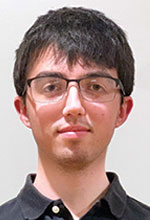
 Samuel A. Morris
The Systems Group
While attending Arkansas State University, I have tried to gain as much experience in the steel industry as I could. For three summers, I worked in a steel fabrication shop where I became accustomed to the challenges and culture of that environment. I did not want to continue in that position after graduating, however, so it was important to me that I try to get experience in the design aspect of engineering. A family friend has worked at The Systems Group for years and had nothing but good things to say, so when I heard of the AIST Steel Intern Scholarship and the collaboration they have with The Systems Group, it seemed like a perfect match. The Systems location I worked at specialized in producing piping systems for steel mills. I have greatly enjoyed my time working here; it has given me a new perspective on the possibilities for my future and shown me what I value most in a job.
One of the unique services that Systems offers is laser scanning, where a member of the engineering office travels to a mill and uses a scanner to gather 3D point data of the surroundings. Once this data is gathered, it must be connected to the software Cintoo. Aligning all the scans taken provides the mill with an accurate model that can be used for measurements without having to travel out in the field. This is especially important for mills that are undergoing maintenance or trying to upgrade a system, since the original plans used for construction will likely not be accurate to what was erected. During my first couple of weeks, I was tasked with aligning these scans, which provided me with an understanding of how a mill is laid out and why. Spending weeks exploring each mill and trying to understand what I was looking at provided context for my future work. By the end I could draw each mill from memory and explain the processes that occurred in each section, which are skills that could only be gained from experience.
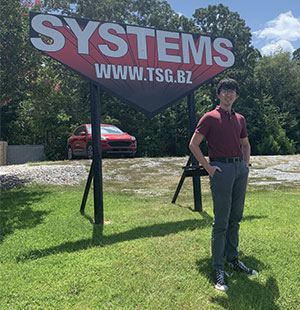 Every new hire and intern at The Systems Group must complete an introductory project which will familiarize them with the process of reading piping and instrument drawings, operating the Plant 3D software, and designing spools. I was given a job that was completed last year as my project, where I had to learn every step of the process and ask many questions along the way. I believe this was an effective way of learning. Since each line of pipe is unique, it allowed me to ask questions when they arrived and learn to think about lines in the most effective way, compared to just being told or shown how to do it. The project consisted of reading the piping and instrument drawing, modeling in Plant 3D off a provided trace, assigning line and spool numbers, creating isometric drawings from the model, and finally sending it to the shop or field. Trying to find the most efficient way to spool a line of pipe proved to be the most difficult lesson I learned. The goal is always to be the most efficient while considering what could be made in the shop and what needs to be done in the field. A good designer can save people in the field hours of work by being aware of their surroundings and the limitations of each line, and ultimately having the most complicated parts be assembled in the shop, then shipped. This process is what most of my questions centered around. In comparison, working with Plant 3D and reading the piping and instrumentation drawings became second nature after only a couple days. Completion of the project aligned me with everyone else starting a new job, so I was able to test what I learned for the remainder of the internship.
This internship has helped me build many skills that will stay with me for the rest of my career. I have become much more proficient in AutoCAD over the summer. I have also built essential communication skills due to the nature of the training project. Since my training was largely self-driven, by asking as many questions as possible I became much better at articulating problems I encountered or trying to figure out how other people think. After the project I also had to submit a few requests for information, where the mill will respond to any specific questions I have. This is an important process and would carry over to any contracting jobs. I have built up many relationships as well, not just with The Systems Group but with the companies they collaborate with, too.
I am extremely thankful to AIST for providing me the opportunity to have this internship and gain a scholarship out of it as well. I also extend my thanks to The Systems Group for taking the time to teach me over this past summer; this internship has provided me with the experience to better know what kind of career I would like to strive for. It is my hope that after graduation I will be welcomed back to this company to continue doing work I enjoy with people I am happy to be with.